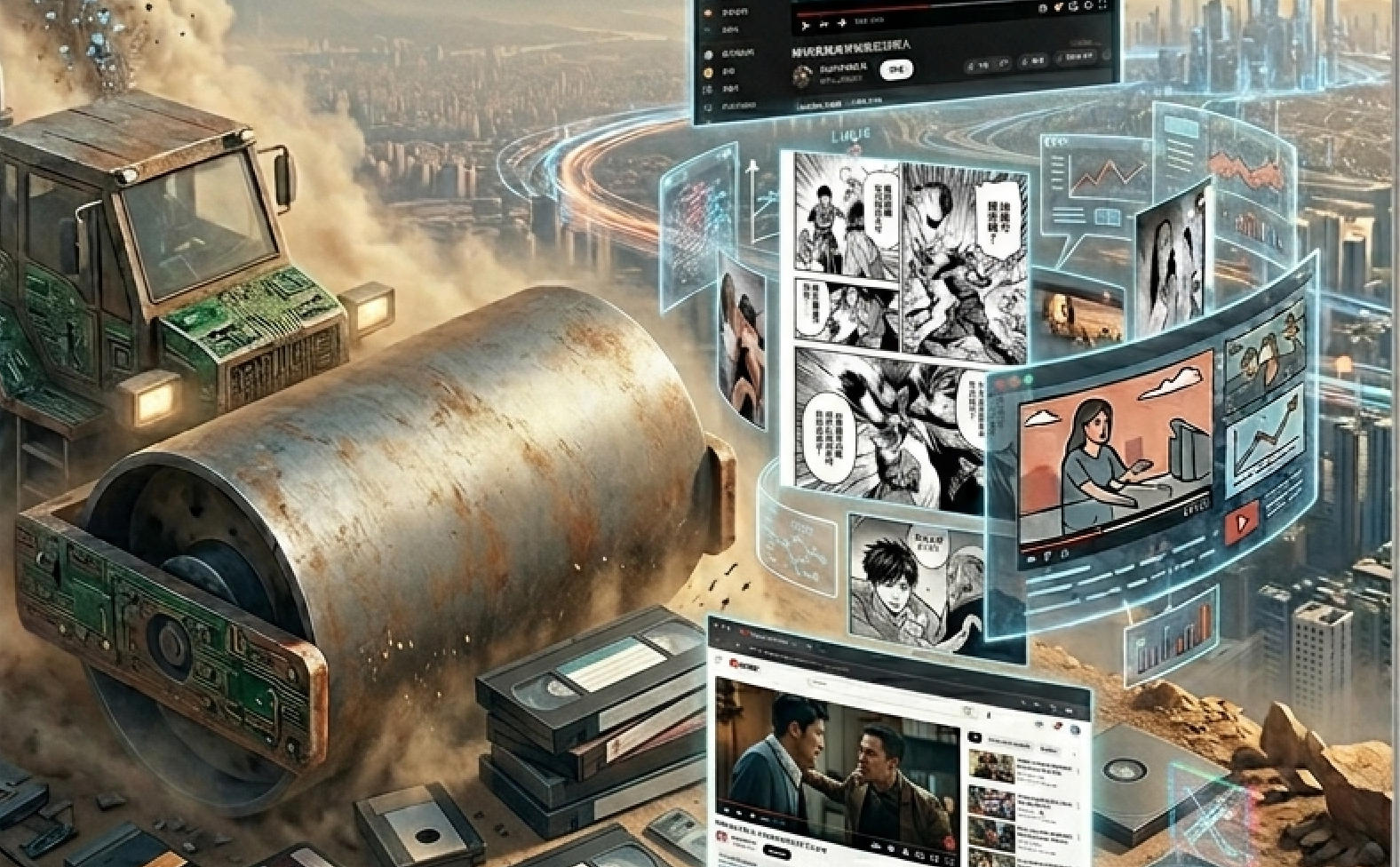
The Event
In 2026, AI video agents are surging as major Chinese tech firms—ByteDance’s Seedance, Kuaishou’s KeLing, and Alibaba’s HappyHorse 1.0—flood the market with video generation at near-zero marginal cost (as low as RMB 0.9 per second for 720p). ByteDance’s “Sui Bian” app, launched in January, integrates generation tools with a creator community, embedding AI directly into the content workflow. Meanwhile, startups like Creati hit $20M ARR in a year, and LiblibAI closed a $130M Series B, signaling investor confidence despite intensifying pressure from incumbents.
Data & Context
China’s tech giants are reshaping the supply chain: their ability to subsidize models and iterate rapidly is collapsing the traditional “model + light app” startup model. Capital still flows to firms like LiblibAI not because of technical moats, but because video’s complexity—spanning creativity, aesthetics, distribution, and conversion—slows full-chain substitution. Yet the real strategy isn’t to kill tools; it’s to own the ecosystem. Platforms like Douyin use “tool + community” to capture behavioral data, turning every generated clip into training fuel for next-gen recommendation and ad systems. For small players, this means shifting from independent service providers to mere compute brokers. Survival hinges on inserting irreplaceable nodes into the creative chain—where giants won’t, or can’t, go.
Hongshugu Insights
Upstream Knows Before Downstream — Here Is the Signal: AI video tools won’t birth the next Adobe, because value no longer resides in the interface, but in the network of creators, data, and commercial outcomes they connect. While some startups chase user growth and ad efficiency—suffering margin erosion—others are pivoting to “token-based billing + creator fulfillment.” ZeroCut routes jobs to skilled freelancers; TapNow embeds AI outputs directly into clients’ e-commerce KPIs. The former shrinks when models drop in price; the latter deepens dependency by tying itself to business results. The winner isn’t the best model builder—it’s the platform that orchestrates creators, owns the feedback loop, and binds AI to real-world revenue. The baton has passed from developers to coordinators.
Reference: 36氪