
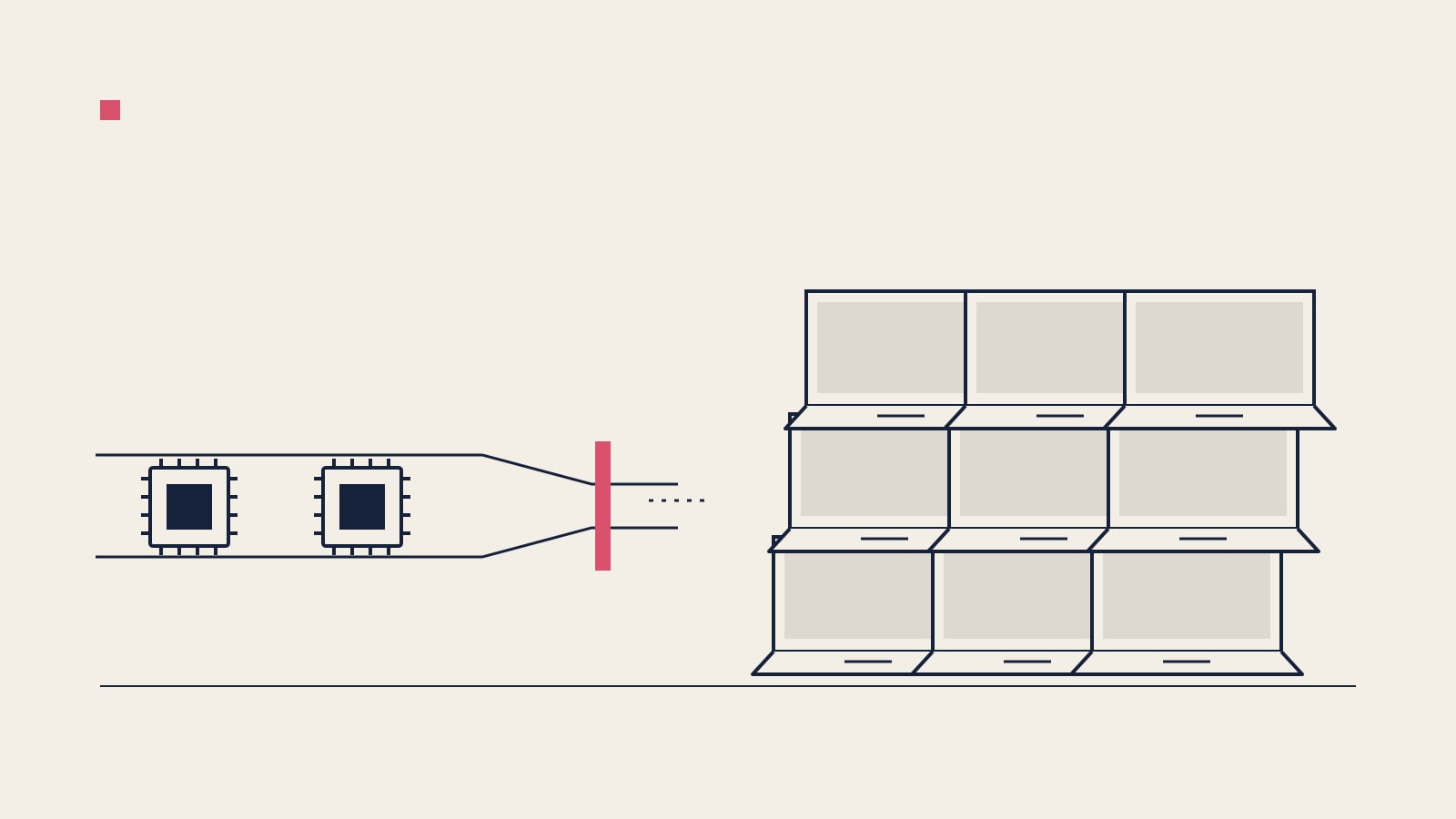
Memory prices continue to rise, yet some PC manufacturers are revising their purchasing plans. TrendForce's latest research describes manufacturers buying ahead of price increases, then facing weak end-market sales and growing finished-goods inventories. It exposes a business tension: securing a good component price does not guarantee buying the right quantities or configurations.
What happened
In research published on November 11, TrendForce reported that some PC manufacturers had brought procurement and production forward into the first half of the year, anticipating further memory price increases. Higher retail prices subsequently weighed on sales in Asia and Europe, while finished-goods inventories rose among some manufacturers and distribution channels. Some manufacturers have begun revising subsequent purchases and renegotiating next year's product mix with memory suppliers, considering lower-specification memory and processors. These are the research firm's observations about part of the market, not every brand.
On the same day, memory distributors interviewed by Chinese news outlet The Paper described a divided market. Enterprise demand continued to support prices, while consumer products were also becoming more expensive but offered room for negotiation. One interviewee said weak sales of end products were limiting the consumer market's ability to absorb increases. Such channel accounts cannot represent the entire industry, but they indicate resistance to passing upstream prices through to buyers.
Background
Buying early has a rationale. If memory becomes more expensive, earlier purchases can cushion costs; when supply is uncertain, inventory can also protect production. In an August account of its strategy on its own website, ASUS grouped strategic inventory, long-term supplier agreements, flexibility across configurations and a focus on higher-value products as responses to shortages. It presented a combination of measures rather than a standalone bet on inventory.
This company account neither establishes that ASUS has the inventory pressures described above nor proves that its strategy has eliminated risk. It offers a useful comparison: the results of stocking up need to be assessed alongside the products a manufacturer can adjust and the customers it can sell to.
Upstream suppliers have not abandoned consumer markets either. TrendForce observes that AI demand has encouraged memory manufacturers to prioritize related supply, but relationships with PC customers remain a consideration. Meanwhile, some Chinese suppliers and module manufacturers have attracted more orders in mainstream-capacity client SSDs by offering comparatively moderate price increases. Tight supply can coexist with room to negotiate in particular segments; changes in DRAM and SSD purchasing should not be treated as interchangeable.
Hongshugu Insights
Buying ahead makes two judgments at once: components will become more expensive, and the products built with them will still sell. Chip quotations can test the first; only customer payments can test the second. The distance between them is what makes the present inventory pressure revealing. Even if subsequent increases vindicate a purchase price, components must still go into suitable products that sell at acceptable prices. If more expensive PCs lead some buyers to postpone purchases, stock intended to secure production can become capital waiting for demand. TrendForce's account of early purchases, rising inventories and revised plans does not establish stocking up as the sole cause of weak sales. It does show why evaluating procurement only by the cost saved leaves out sales velocity and product mix. A company can secure a favorable purchase and still face pressure across the business.
The difficulty is that clearing inventory and preserving product appeal may call for different choices. Lower specifications can contain costs but weaken the appeal originally promised; preserving specifications and raising prices continues to test buyers' budgets. If earlier purchases have committed substantial quantities and specifications, subsequent adjustments must also accommodate the stock on hand. ASUS's decision to discuss configuration flexibility alongside inventory and long-term agreements therefore deserves more attention than an assurance of ample stock alone. Supply certainty and the ability to adjust provide different protections: one enables production according to plan, the other leaves room to respond when the market departs from it. Inventory can, of course, also be affected by replacement cycles, promotions and channel timing; the available evidence cannot separate their contributions. Early purchasing paired with healthy turnover remains a useful buffer. The problem arises when confidence about upstream prices is mistaken for confidence about downstream demand.
Over the next two quarters, memory prices alone will therefore be insufficient to judge PC manufacturers' position. More revealing will be whether revised purchases help clear finished-goods inventories, whether configuration changes sustain sales and whether margins withstand the adjustments. Healthy turnover and profitability among manufacturers that bought early would support inventory's role as protection. If favorable purchase costs persist but products remain slow to sell, the weakness lies in matching demand. Without disaggregated disclosures, that judgment must remain open. The change nevertheless invites a different understanding of buying well: for a manufacturer, procurement does not end at the warehouse. A favorable component price becomes a durable business advantage only when the product sells.